
In blended families, estate planning is about more than dividing assets—it focuses on fairness, clarity, and ensuring loved ones are protected. If you have children from a prior marriage, their interests may conflict with your current spouse’s. Without a clear plan, Arizona’s default laws may distribute your estate in ways you did not intend. Outdated documents or unclear beneficiary designations can also cause unintended disinheritance or family conflict. Careful planning helps you stay in control of your legacy and protect all your beneficiaries as intended.
Key Takeaways
- Arizona’s community property laws can significantly impact inheritance outcomes.
- Without planning, children from a prior marriage may be unintentionally disinherited.
- Trusts are one of the strongest tools for protecting all beneficiaries fairly.
- Beneficiary designations must align with your estate plan
- Prenuptial and postnuptial agreements can reinforce protections
- Common mistakes often come from outdated or incomplete planning
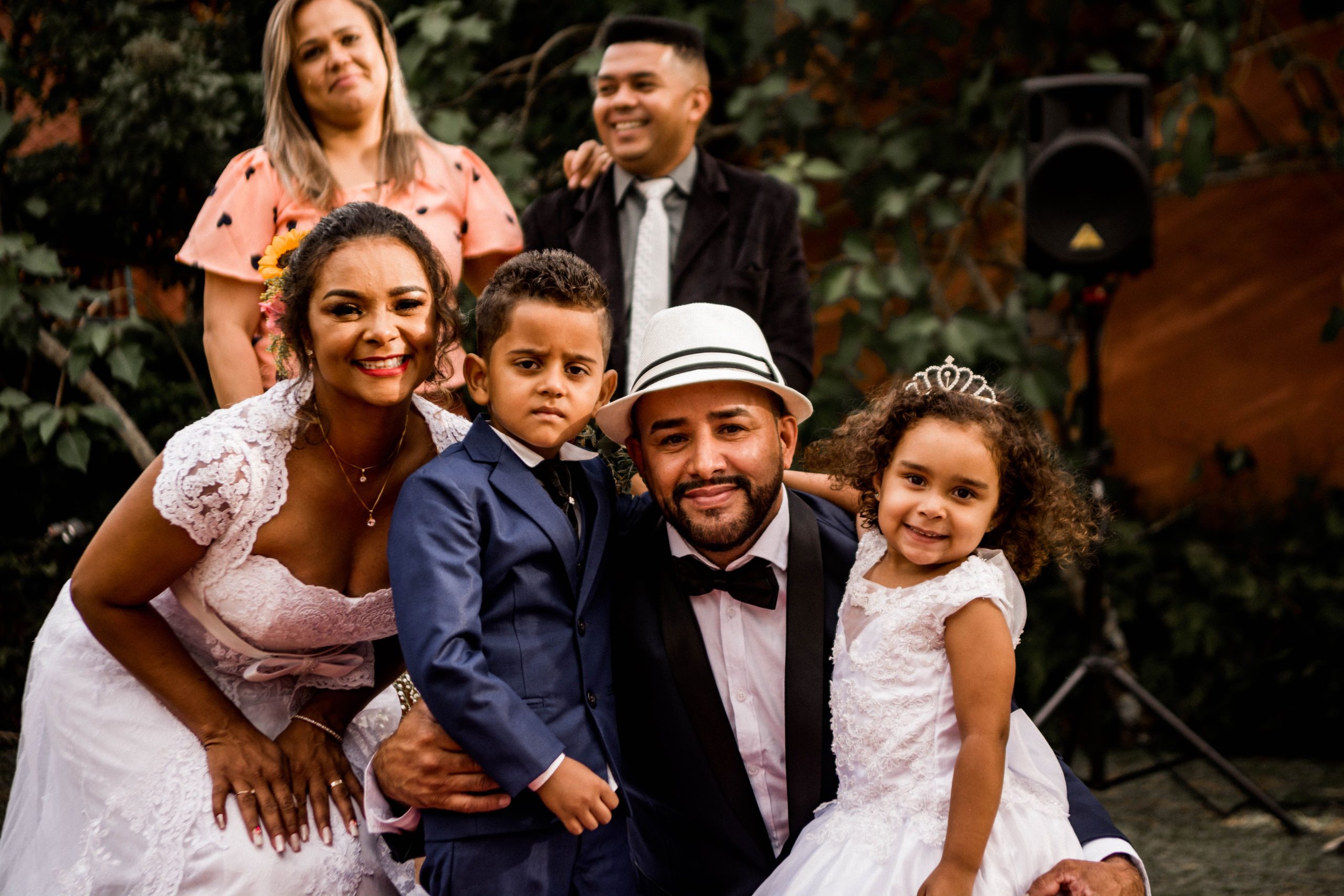
Why Arizona Blended Family Estate Planning Is So Complex
Blended family estate planning in Arizona is more complex than many people expect because multiple legal systems and family dynamics overlap at the same time. You are not just planning for who inherits your assets—you are also navigating community property law, separate property rights, and emotional obligations between a current spouse and children from a prior marriage.
In many cases, conflict does not come from bad intentions. It comes from unclear instructions. Without a structured estate plan, your spouse and children may interpret fairness differently, which can lead to disputes after your death.
Another complication is that Arizona’s community property laws automatically give your surviving spouse strong rights to marital assets. This means that even if you intend to leave assets to your children from a prior marriage, those intentions must be clearly documented and legally structured, or they may not be fully carried out.
Understanding these layers early is the foundation for building a plan that actually works in real life—not just on paper.
Why Protecting Children from a Prior Marriage Is Critical in Arizona Estate Planning

Risks of unintended disinheritance
One of the biggest risks in blended families is unintended disinheritance. If you pass away without a properly structured estate plan, your surviving spouse may inherit most or all of your assets, depending on how they are titled. This can leave your children from a prior marriage with little or nothing, even if that was never your intention.
This issue is especially common when people rely on outdated wills or fail to update their documents after remarriage. Even small oversights can result in major changes to how your estate is distributed.
Community property rules in Arizona
In Arizona, community property laws play a major role in estate distribution. Generally, assets acquired during marriage are considered jointly owned by both spouses. That means your current spouse may already have a legal claim to half of many assets, even before your estate plan is applied.
This can significantly reduce what is available for children from a prior marriage unless you take steps to clearly separate and structure your assets.
Blended family dynamics
Blended families often involve emotional complexity. You may want to provide for your current spouse while also ensuring your children from a prior relationship are financially secure. Without clear planning, assumptions can lead to conflict between family members, especially during an already difficult time.
A well-structured estate plan helps reduce misunderstandings and sets clear expectations for everyone involved.
What Typically Goes Wrong Without a Plan
When no clear estate plan exists, Arizona law will step in and decide how your assets are distributed. This is where many blended families experience unintended outcomes.
One common issue is that a surviving spouse may inherit a large portion—or even all—of the estate under default rules, leaving children from a prior marriage waiting for what may never come. Even when children are included, they may only receive what remains after the spouse’s share is calculated.
Another common problem involves outdated wills. For example, a will created during your first marriage may still name your former spouse or fail to account for new children. These documents can still create confusion even if they are no longer aligned with your life.
You also risk asset fragmentation. Some accounts may pass to your spouse through beneficiary designation, while other assets go through probate to children, creating uneven and sometimes unfair distributions.
The biggest risk is not intentional disinheritance—it is inconsistency. Different assets follow different rules, and without coordination, your estate plan can break apart into pieces that no longer reflect your wishes.
Using Trusts to Protect Children from Prior Marriage

Using trusts is one of the most effective ways to protect children from a prior marriage while ensuring a surviving spouse is still provided for. These tools allow you to control distributions, reduce probate, and create clear boundaries between beneficiaries. In blended families, trusts offer structure, flexibility, and long-term security.
Revocable living trust basics
A revocable living trust is one of the most effective tools for protecting children from a prior marriage. It allows you to control how and when your assets are distributed while avoiding probate. You can also update the trust during your lifetime as your circumstances change.
With trust, you can clearly separate what goes to your spouse and what is reserved for your children. This level of control is especially valuable in blended families.
Marital trusts and QTIP strategies
A common strategy in Arizona estate planning is using a marital trust, often structured as a QTIP (Qualified Terminable Interest Property) trust. This allows your spouse to receive income and benefit from certain assets during their lifetime, while ensuring that the remaining assets ultimately pass to your children.
This structure helps balance competing needs—supporting your spouse while protecting your children’s inheritance rights.
Separate shares or subtrusts
You can also divide your trust into separate shares for each group of beneficiaries. For example, one share may support your spouse, while another is reserved for your children from a prior marriage.
This approach ensures clarity and prevents future disputes by clearly defining who receives what and under what conditions.
Step-by-Step Structure of a Blended Family Trust Plan
A properly structured trust plan in Arizona typically follows a layered approach designed to balance both protection and flexibility.
First, you define separate categories of assets. This usually includes community property, separate property, and beneficiary-designated accounts. Each category may be treated differently in your plan.
Second, you decide how your surviving spouse will be supported. In many blended family plans, this includes allowing the spouse to receive income from a trust during their lifetime, rather than outright ownership of all assets. This ensures financial security without unintentionally disinheriting children.
Third, you structure the inheritance for children from a prior marriage. This can include immediate distribution, staged inheritance at certain ages, or milestone-based distributions such as education, housing, or life events.
Fourth, you appoint a trustee. This is critical. The trustee ensures your instructions are followed and manages the balance between spouse support and children’s inheritance.
Finally, you build in flexibility. Life changes, tax laws evolve, and family needs shift. A good trust allows adjustments while still protecting your core intentions.
This step-by-step structure is what transforms a basic estate plan into a functional blended family protection system.
Wills vs Trusts in Blended Families

Limitations of wills
A simple will may seem sufficient, but in blended families, it often falls short. Wills must go through probate, which is a public and sometimes lengthy court process. More importantly, wills can be overridden by beneficiary designations and community property laws in Arizona.
Wills also do not provide ongoing control over how assets are used after your death, which can be important when balancing needs between a spouse and children from a prior marriage.
Probate risks in Arizona
Probate in Arizona can take months or longer, depending on the complexity of the estate. During this time, family members may have limited access to assets, and disputes can arise over the interpretation of your wishes.
If your plan is unclear or outdated, the probate court may distribute assets in a way you did not intend.
Why trusts offer more control
Trusts allow you to bypass probate entirely for assets properly placed in the trust. More importantly, they give you detailed control over timing, conditions, and distribution.
This means you can protect your children from a prior marriage while still ensuring your spouse is financially supported in a structured and predictable way.
Beneficiary Designations and Account Planning
Retirement accounts and life insurance
Many people overlook the fact that retirement accounts and life insurance policies often pass outside of a will or trust. These accounts go directly to the named beneficiary.
If your beneficiary designations are outdated, your current spouse may receive everything—even if your will says otherwise. This is one of the most common causes of accidental disinheritance.
Common mistakes in beneficiary planning
A frequent mistake is naming a spouse as the primary beneficiary on all accounts and never updating them after divorce or remarriage. Another issue is naming minor children directly, which can create legal complications.
Even small errors in these designations can override your entire estate plan.
Coordinating with your overall estate plan
To properly protect children from a prior marriage, your beneficiary designations must match your trust or will structure. Every account should be reviewed regularly to ensure consistency.
Coordination is key. Without it, even the best estate plan can fail in practice.
Arizona Account Types Most People Forget
Many people focus only on wills and trusts, but in Arizona estate planning, several account types operate outside of those documents.
These include payable-on-death (POD) bank accounts, transfer-on-death (TOD) brokerage accounts, retirement plans like IRAs and 401(k)s, and life insurance policies. Each of these transfers directly to the named beneficiary, regardless of what your will says.
This is where many blended family mistakes happen. For example, if your spouse is listed as the beneficiary on all retirement accounts, your children from a prior marriage may receive nothing from those assets, even if your trust divides assets differently.
Another overlooked issue is outdated beneficiary forms. Many people forget to update them after divorce or remarriage, which can lead to unintended inheritance outcomes.
To properly protect children from a prior marriage, every financial account must be reviewed and coordinated with your estate plan. If even one account is inconsistent, it can override your entire plan in practice.
Prenuptial and Postnuptial Agreements

Prenuptial and postnuptial agreements are important tools for protecting children from prior relationships by clearly defining separate property and inheritance expectations. In blended families, especially second marriages, they help reduce conflict and uncertainty. However, they work best alongside a full estate plan to ensure intentions are legally supported and enforceable.
How do they protect children?
Prenuptial and postnuptial agreements can play a powerful role in protecting children from prior relationships. These agreements clarify what assets remain separate property and how they will be distributed upon death or divorce.
They are especially useful in second marriages where both spouses have children from prior relationships.
What they can and cannot do
While these agreements are helpful, they are not a complete estate plan on their own. They cannot replace trusts or wills, but they can reinforce your intentions and reduce legal disputes.
They are most effective when combined with a comprehensive estate plan in Arizona.
Timing and enforceability in Arizona
In Arizona, these agreements must be properly executed, fully disclosed, and entered into voluntarily to be enforceable. Timing matters—agreements created under pressure or without legal guidance may be challenged later.
Common Mistakes and How to Avoid Them
Common estate planning mistakes can quietly undermine even well-intentioned plans in blended families. Failing to update documents, assuming equal treatment automatically means fairness, or neglecting to fund trusts properly can all create unintended outcomes. These errors often lead to disputes, but careful planning and regular reviews help ensure your wishes are carried out.
Failing to update estate documents
One of the most common mistakes is simply not updating your estate plan after major life changes such as remarriage, divorce, or the birth of new children. Outdated documents often override current intentions. Regular reviews ensure your plan still reflects your wishes.
Treating all children equally without structure
Many parents want to “treat all children equally,” but without structure, this can lead to unintended consequences. Equal does not always mean fair, especially when children come from different marriages with different needs. Structured planning ensures fairness while still respecting your intent.
Not funding trusts properly.
A trust only works if it is funded correctly. This means transferring ownership of assets into the trust. Many people create trusts but never complete this step, leaving assets exposed to probate.
Proper funding ensures your plan actually works when it matters most.
Common Emotional Mistakes in Blended Family Planning
Estate planning mistakes in blended families are not always technical—they are often emotional.
One common issue is the assumption that “everyone will do the right thing.” While families may intend fairness, grief, and financial pressure can change how decisions are interpreted after death.
Another emotional mistake is avoiding difficult conversations. Many people delay estate planning because they do not want to upset a spouse or children. However, avoiding the conversation often creates larger conflicts later.
There is also the issue of equal treatment versus fair treatment. Equal division sounds simple, but in blended families, it may not reflect financial realities, such as prior inheritances, caregiving roles, or long-term support needs.
The most effective estate plans acknowledge these emotional dynamics upfront and structure solutions that reduce conflict rather than relying on informal agreements.
Tax Implications and Inheritance Timing in Arizona Blended Families

When you are planning how to protect children from a prior marriage in Arizona, it is not only about who receives what—it is also about when and how they receive it. Timing and tax structure can significantly affect the long-term value of your estate.
One of the most important concepts in estate planning is the step-up in basis. Under current U.S. tax law, when a person inherits certain assets after death, the asset’s value is typically “stepped up” to its fair market value at the time of death. This can reduce capital gains taxes if the asset is later sold. However, how you structure ownership between a spouse and children can affect how this benefit is applied.
In blended families, it is common to leave assets to a surviving spouse first, with children from a prior marriage receiving what remains later. While this approach can provide financial security for the spouse, it may also delay inheritance for children and potentially expose remaining assets to market changes, creditor risk, or remarriage complications.
Trust structures can help solve this timing issue. For example, a properly designed trust can allow a surviving spouse to benefit from income generated by assets while preserving the underlying principal for children. This ensures that children’s inheritance is not dependent on future financial circumstances or decisions made by the surviving spouse.
Another important consideration is estate tax exposure, even though most Arizona estates will not exceed federal exemption thresholds. High-value estates, however, may require more advanced planning strategies such as credit shelter trusts or marital deduction planning to avoid unnecessary taxation later.
You should also consider liquidity. If your estate includes real estate or business assets, your heirs may need cash to cover taxes, debts, or maintenance costs. Without proper planning, children from a prior marriage may be forced to sell inherited property quickly, potentially at a lower value than intended.
Finally, the timing of distributions matters. Immediate inheritance may provide simplicity, but staged distributions can protect younger beneficiaries from poor financial decisions while ensuring long-term stability. This is especially useful in blended families where children may be at different life stages or have different financial needs.
Understanding tax implications and timing ensures your estate plan does more than transfer wealth—it preserves it in a structured and intentional way for both your spouse and your children from a prior marriage.
Conclusion
Protecting children from a prior marriage in Arizona estate planning requires more than good intentions. It requires structure, coordination, and regular updates. Without a clear plan, state laws and outdated documents can easily override your wishes and create unintended outcomes.
By using tools like trusts, updated beneficiary designations, and marital agreements, you can create a plan that supports both your spouse and your children from a prior relationship. In a blended family, clarity is one of the greatest gifts you can leave behind.
Estate planning in Arizona is not just about distributing assets—it’s about protecting relationships and ensuring your legacy is carried out the way you intend.
Frequently Asked Questions
1. Can children from a prior marriage be disinherited in Arizona?
Yes, if your estate plan is outdated or incomplete, children from a prior marriage can unintentionally receive little or no inheritance.
2. What is the best way to protect children from a prior marriage?
A trust-based estate plan is typically the most effective way to ensure children are protected while still providing for a surviving spouse.
3. Do wills override beneficiary designations in Arizona?
No. Beneficiary designations on accounts like life insurance and retirement plans generally override wills.
4. How does Arizona community property law affect inheritance?
Community property laws give your spouse rights to half of marital assets, which can significantly impact what is available for children from a prior marriage.
5. Can I leave everything in a trust to control distribution?
Yes, trusts allow you to set detailed instructions for how and when assets are distributed to different beneficiaries.
6. Do I need a prenup to protect my children’s inheritance?
A prenup is not required, but it can help clarify separate property and support your overall estate planning strategy.
7. How often should I update my estate plan?
You should review your estate plan every 3–5 years or after major life changes such as marriage, divorce, or the birth of a child.
Estate Planning for Blended Families in Arizona With DBF Legal
Blended families often come with unique estate planning challenges that require more than a basic will or outdated legal documents. When spouses have children from previous relationships, separate assets, shared property, or different long-term goals, it becomes critical to create a plan that protects everyone involved while clearly outlining your wishes. DBF Legal helps blended families throughout Arizona build customized estate plans designed to reduce conflict, protect loved ones, and provide long-term financial security. Whether your goal is to provide for a surviving spouse, preserve inheritances for children from a prior marriage, protect family assets, or avoid probate complications, our attorneys help create strategies tailored to your family’s specific needs.
Without a properly updated estate plan, blended families can face unintended outcomes, family disputes, and uncertainty during already difficult times. A plan created years ago may no longer reflect your current relationships, financial priorities, or future intentions. DBF Legal works closely with Arizona families to create and update wills, trusts, powers of attorney, healthcare directives, and asset protection strategies that evolve alongside your life and family structure. Contact DBF Legal today to create an estate plan that protects your spouse, children, assets, and legacy with clarity and confidence.
Disclaimer
The materials available on this website are for informational and educational purposes only and are not intended to provide legal or professional advice. You should consult with a qualified attorney for advice concerning any particular legal matter or situation. Do not act or refrain from acting based on any content included on this site without seeking appropriate legal counsel. The information presented on this website may not reflect the most current legal developments or laws. No action should be taken in reliance on the information provided on this website. We disclaim all liability for actions taken or not taken based on any or all of the contents of this site to the fullest extent permitted by law.